Est. 2019
Est. 2019
Gateway X is a St. Louis fund founded by Jesse Pujji, who built and sold Ampush "the same way: profitable, founder-controlled, no venture treadmill." It describes itself as "the first residency and fellowship built for seedstrapping, the third path between venture and bootstrapping," and backs founders who want to build profitable companies they keep control of.
Design By

Last Updated:
November 20, 2026

Parth Gaurav
Founder & CEO
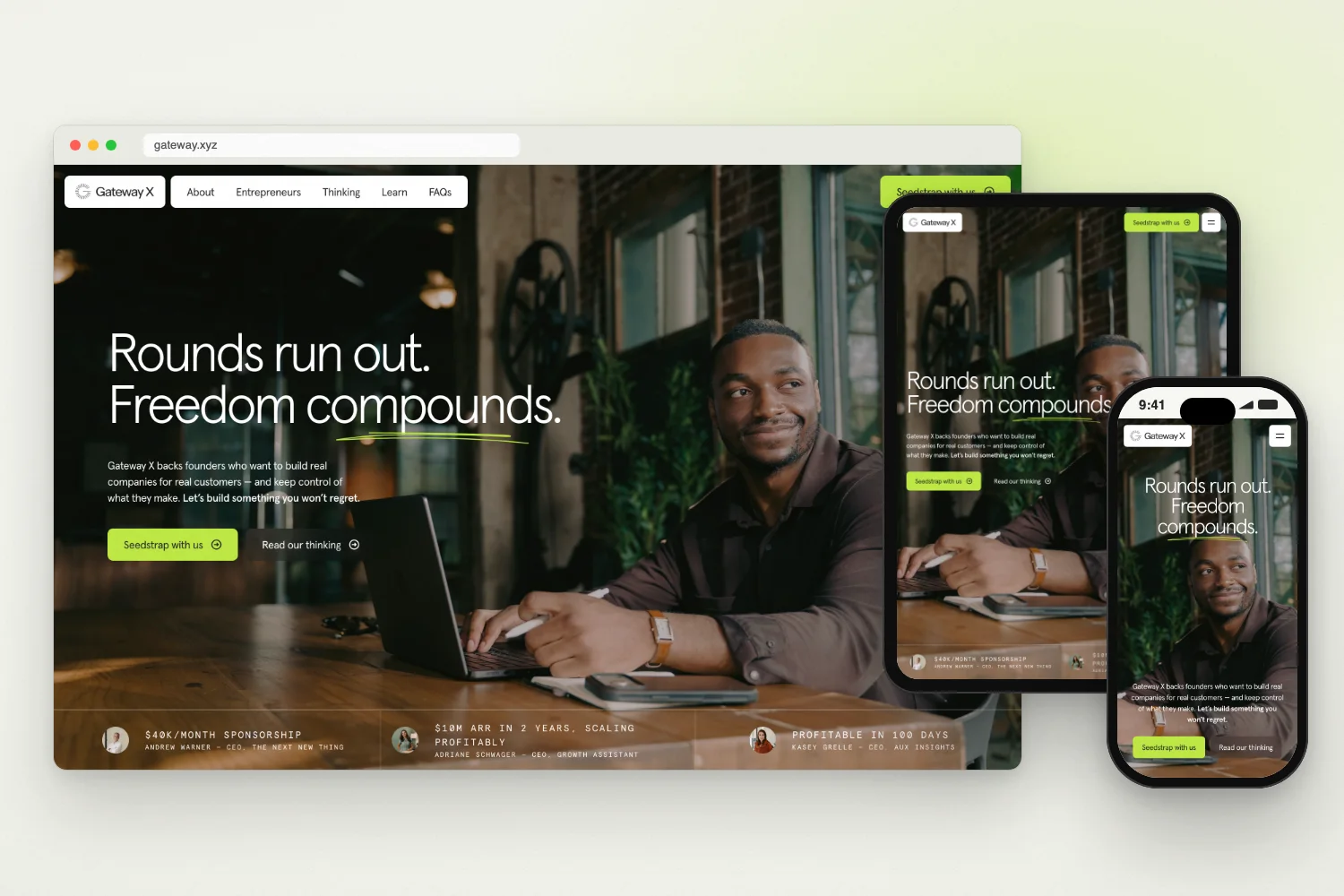
Gateway X is a St. Louis fund founded by Jesse Pujji, who built and sold Ampush "the same way: profitable, founder-controlled, no venture treadmill." It describes itself as "the first residency and fellowship built for seedstrapping, the third path between venture and bootstrapping," and backs founders who want to build profitable companies they keep control of.
Webflow Development
Website Re-design
November 2026
Gateway X, the fund Jesse Pujji founded, has a different model, and its website is where founders first meet it. With a residency and fellowship launching around seedstrapping, the team needed a site that explained the model, showed the founders it already backs and pointed new ones to apply, built so they could keep it current themselves as residents, essays and FAQs changed.
We built Gateway X's new design in Webflow across nine page templates. Every main page runs on the CMS: long-form Thinking essays on the fund's seedstrapping model, an Entrepreneurs page with portfolio founders and a residency directory, a Learn library filtered by format and topic, shared FAQs, and homepage features switched on from the CMS. We added the page transitions and scroll animation, handled QA, and handed the finished site back into Gateway X's own Webflow workspace at launch.
Before the relaunch, the site still told the old "bootstrap" story, and the content a fund like Gateway X now publishes, essays and FAQs that appear across pages, had nowhere to live in the CMS. Now their team can add or archive a resident, change the order of the directory, publish an essay, pick which pieces feature on the homepage and edit FAQs in the CMS. The site went live on November 16, 2026, in Gateway X's own workspace. We didn't have analytics access for the old site, so there's no baseline to compare traffic or leads against. A PageSpeed check of the homepage on November 20, 2026 scored 92 for performance on mobile and 100 on desktop.
Gateway X is Jesse Pujji's fund, and it backs founders differently. Jesse built and sold Ampush profitable and founder-controlled, and Gateway X exists to help other founders build that way. Its 2023 Webflow site's page title read "Where Entrepreneurs Turn Pro," and its main button said "Bootstrap with us." By 2026 the model had a sharper name, seedstrapping, the third path between venture and bootstrapping, and a residency and fellowship built around it.
A fund's website is where founders decide whether to apply. Gateway X's site needed to say "Seedstrap with us," show the founders it already backs, and give the team a place to publish the thinking behind the model.
In June 2026, Nak Patel, Gateway X's COO, started planning the relaunch. The design was being done by Kanda Studio, the studio Gateway X works with, and Gateway X's own team was writing the copy. What Nak needed was a development team to take the Figma files into Webflow and build them and own the Webflow QA. When he chose us in August, he put it plainly: "I'd like to be able to hand this off to you and have it just get done the right way (questions along the way are totally fine!)."
He set three conditions in writing. We'd handle 100% of QA, and the site would be SEO- and AEO-friendly. Anything his team might reorder, add or remove would run on the CMS. We agreed to all three the same day.
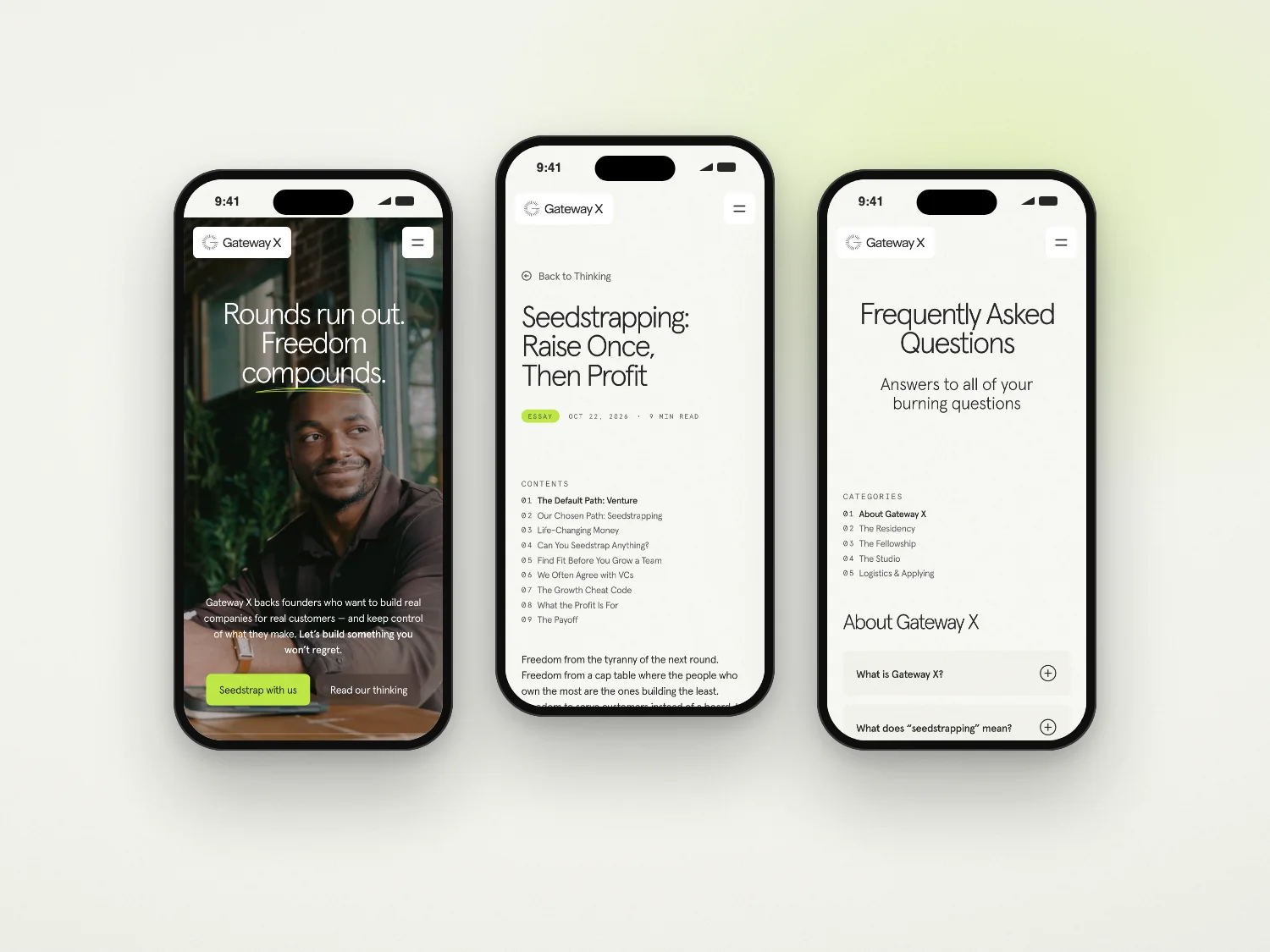
We've built fund sites before, including TenOneTen Ventures, and a few things still made this more than a straight Figma-to-Webflow job.
We started on August 7, while the designers were still closing out a few details and the photography was still being shot. We didn't wait for a final file. We built page by page, starting with the homepage, then Build, FAQs, About and Entrepreneurs, used placeholders where photos were missing, and raised design questions with the designers directly in Figma. Nak asked for an update at the end of each day answering three questions: what got done, what's next and what's blocked. We posted those updates in the shared channel from that day on, and again through the final push when he asked for them in October. All nine templates were built by August 21.
When the Build page went up for review, Nak was specific about the FAQ blocks: "It should be cms driven not code driven pls." The FAQs, he added, "will change frequently." The old site had no CMS for essays or FAQs, so we built both.
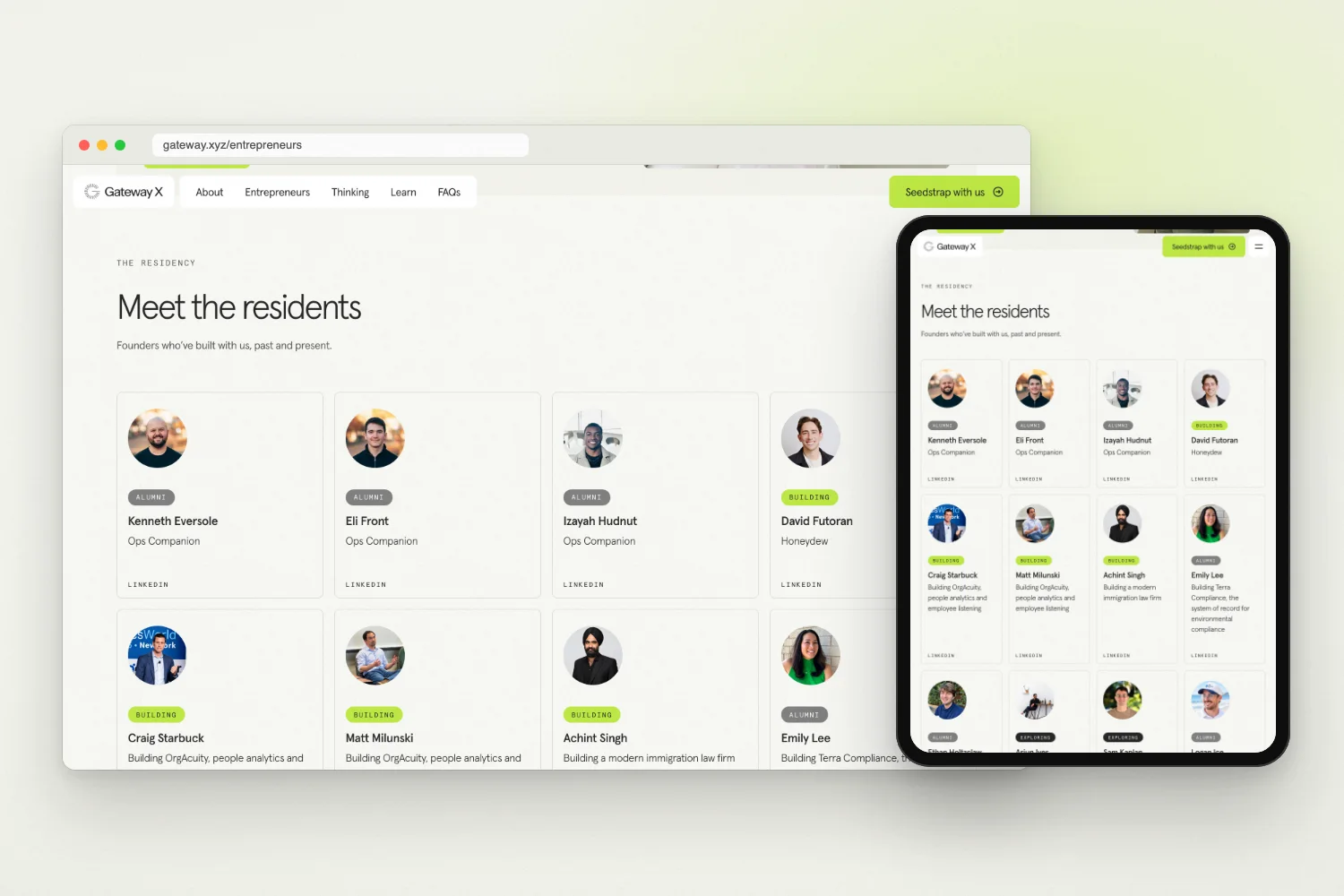
Thinking essays got their own collection, tags and an essay template with a table of contents built from the headings. One FAQ collection feeds the FAQ page and the FAQ blocks on the homepage and Build page, so an answer only gets edited once. It's the kind of control a marketing team should have over its own Webflow site. Residents sit on the Entrepreneurs page next to the portfolio founders Gateway X backs, and each carries a Building, Exploring or Alumni tag with its own color, plus an order field. People can be archived as they move through the program instead of being deleted. The Learn library pulls outside articles, podcasts and videos into one place that filters by format and topic, while Thinking keeps Gateway X's own essays on the site. A switch on each resource decides what features on the homepage.
When we went through the 2023 site, its structure was already clean and easy for search engines and AI assistants to read, which matters for AEO on Webflow. We built the new design on top of it and kept its existing component system instead of starting over. We also took the housekeeping off Gateway X's plate: a redirect map so old URLs like /bootstrap land on /build, a fix for the Terms page, updated legal pages, the sitemap, and image alt text.
The copy of the site we were building in had no site plan and hit Webflow's CMS limits early on. We moved development into our own workspace and transferred the site back to Gateway X's at launch.
Nak's bet was to hand the whole build to one team before the design was final, with QA, search basics and the CMS spelled out in writing. That only works if the CMS structure set up in the first week still fits once the copy, photography and programs settle. He was already planning for change. Looking at the residents page in October, he said: "Looking at this we'll need to redesign this page in 3 months anyways."
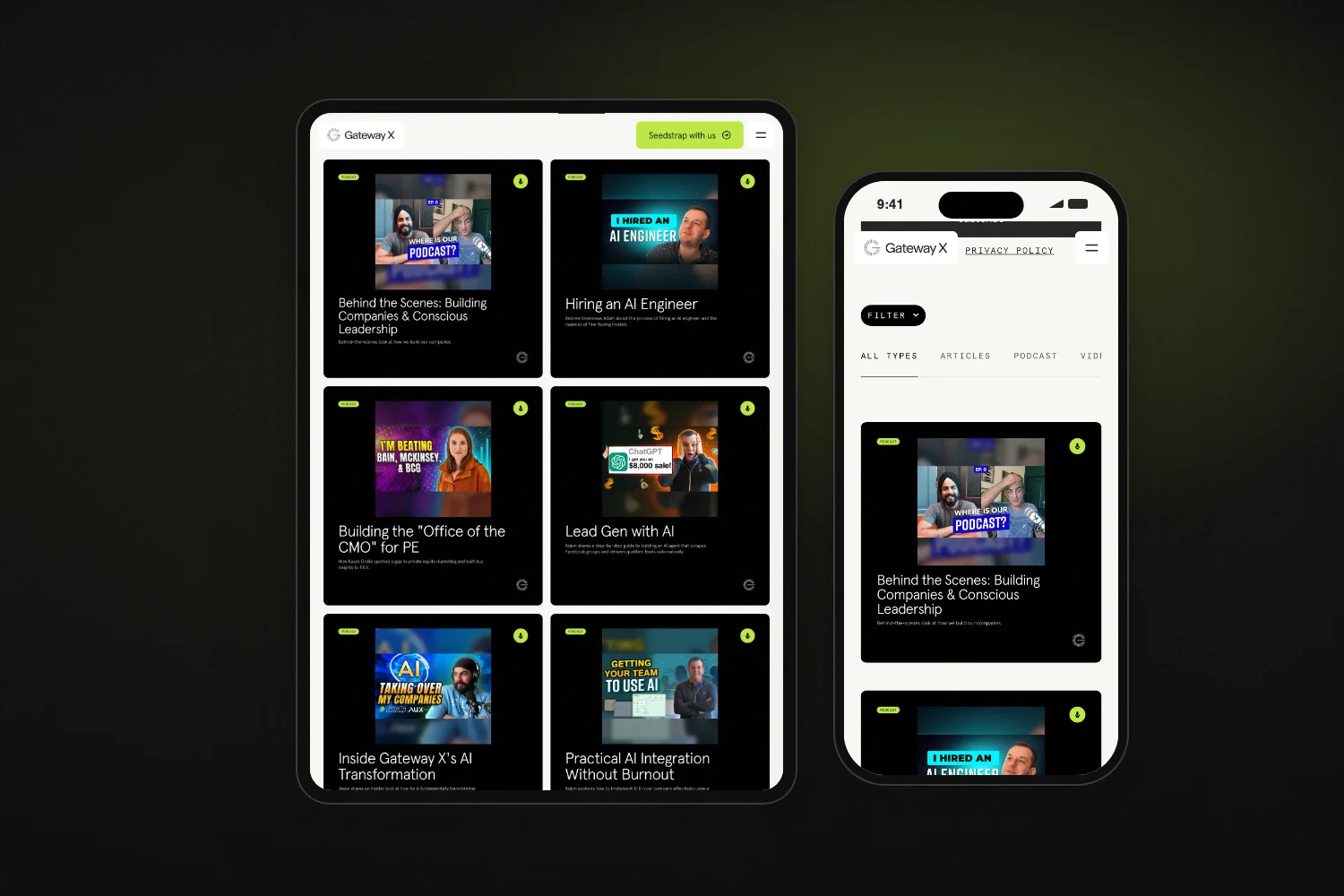
The build was finished in August, and Gateway X chose to launch once its essays, photography and copy were final. That moved the launch from late August to November. When the final push started in late October, their team ran a numbered punch list, and we closed 16 items in the first two days. Some requests arrived late. The site-wide banner had no design, so we built a simple desktop banner and a mobile popup, since a banner on mobile broke the menu. One slider went out in three versions so the team could pick.
The site was ready on Friday, November 13. Nak didn't want to go live late on a Friday, so we moved it to Monday. On launch night we found a domain-record update in Webflow that was still pending and could only be made by whoever held the registrar login. Gateway X's CTO made the change in Cloudflare, and the new site went live on November 16. Within the hour Nak asked about the old site's page-load animation, and we brought it back, adjusted to the new design.
Gateway X's site now lives in their own Webflow workspace, with the old site kept separately as a reference. It says "Seedstrap with us," and the parts that change most are the parts the team runs. Essays, resources, FAQs, residents and homepage features all live in the CMS, so the site can keep growing with the fund.
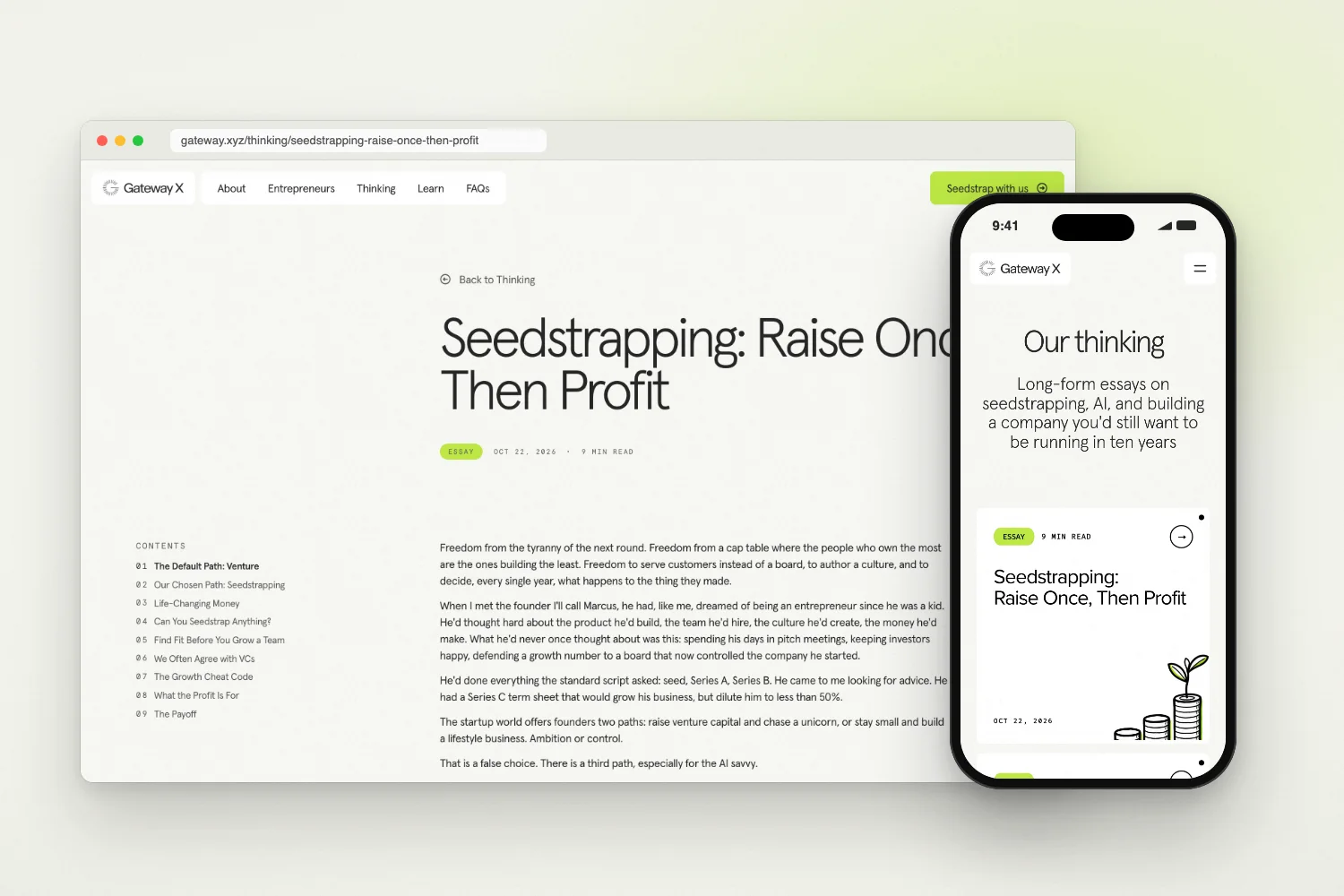
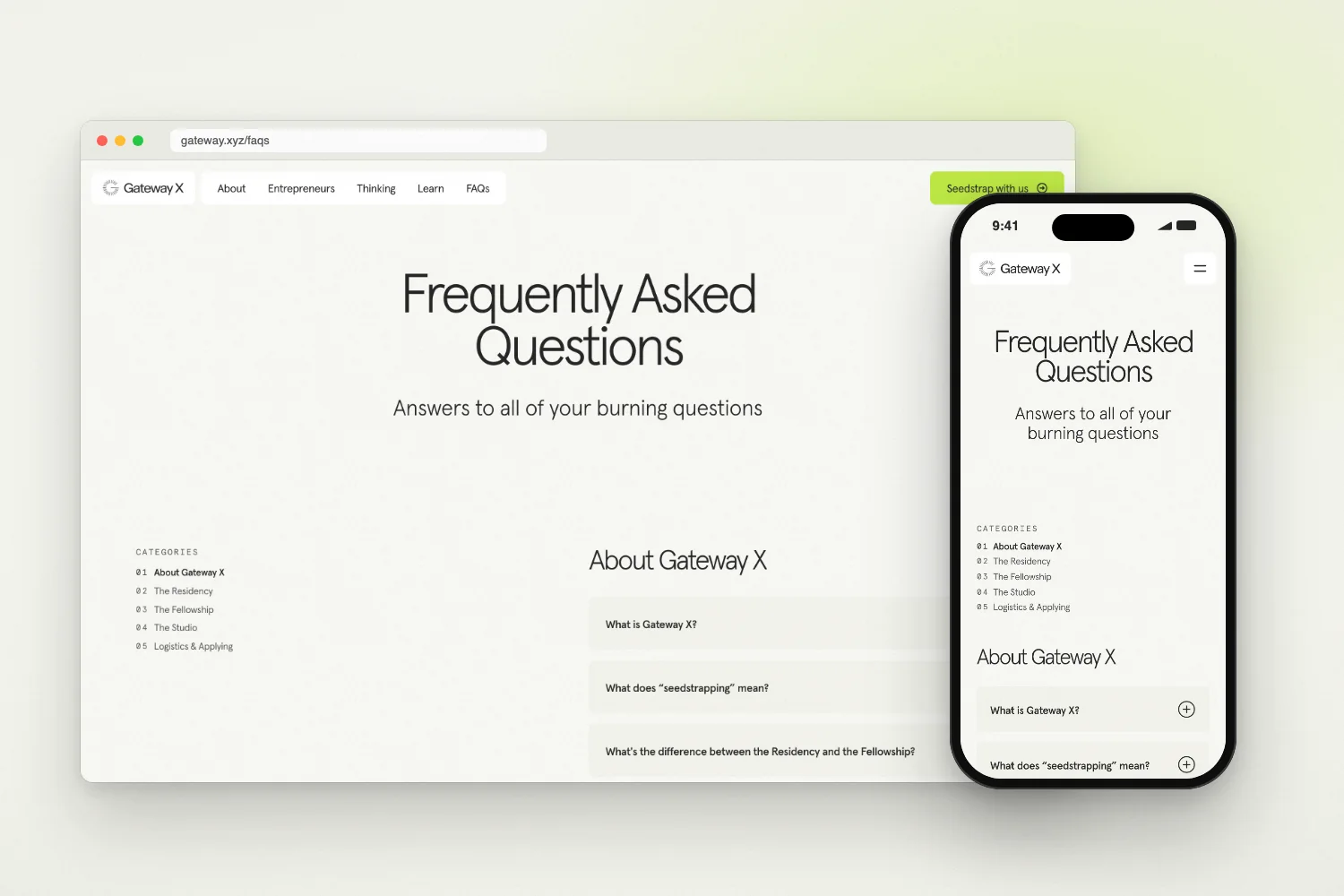
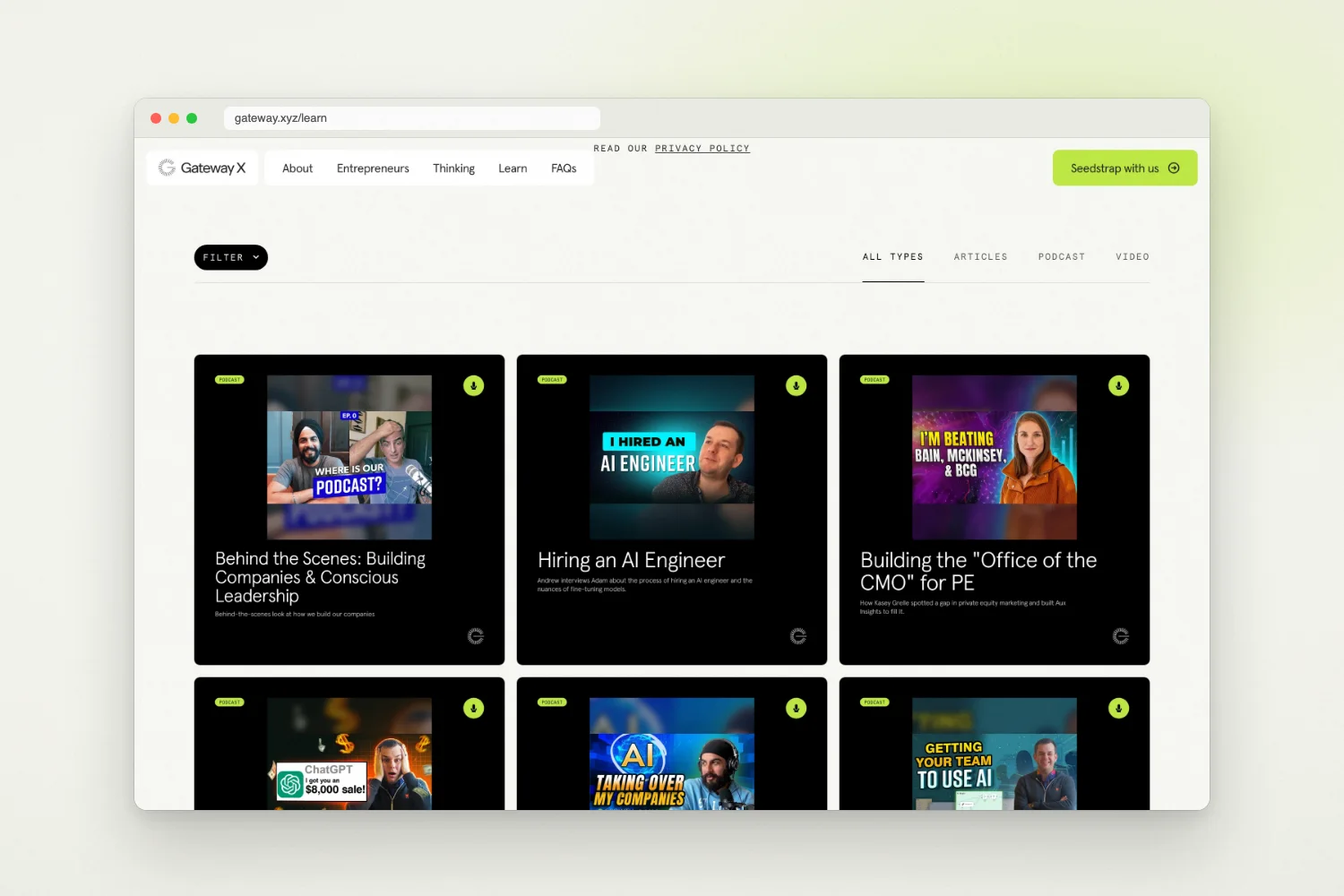
Digi Hotshot built the 2026 website for Gateway X, the fund founded by Jesse Pujji, in Webflow across nine page templates. Every main page runs on the Webflow CMS, including Thinking essays on the fund's seedstrapping model, an Entrepreneurs page with portfolio founders and a residency directory, a Learn library filtered by format and topic, shared FAQs and homepage features, so Gateway X's team updates that content from the CMS. It also built the page transitions and scroll animation, handled QA, and handed the site back into Gateway X's Webflow workspace before it went live on November 16, 2026.
A fund website has to explain the fund's model, show the founders it already backs and make the path to applying clear, and Gateway X's site is built around those jobs. Thinking essays lay out the seedstrapping model, the Entrepreneurs page shows portfolio founders next to the residency directory, and the site points founders to Gateway X's application. Digi Hotshot built each of these on the Webflow CMS so the fund's team can update them as programs and cohorts change.
Digi Hotshot set up the Gateway X site so the content that changes most lives in the Webflow CMS. One FAQ collection feeds the FAQ page and the FAQ blocks on the homepage and Build page, residents can be tagged, reordered or archived, essays publish from their own collection, and a switch on each resource controls what features on the homepage. Gateway X's COO, Nak Patel, asked for this in writing at the start, so his team could reorder, add and remove items without a developer.
When Digi Hotshot reviewed Gateway X's 2023 Webflow site, its structure was already clean and readable for search engines and AI assistants, so there was no reason to start over. Digi Hotshot built the new design on top of it and kept its component system, then added a redirect map so old URLs like /bootstrap land on /build, a Terms page fix, legal page updates, an updated sitemap and image alt text.
Digi Hotshot started building on August 7, 2026 and had all nine page templates built by August 21. The design and the photography were still being finished when the build began, so pages were built one at a time with placeholders. Gateway X chose to launch once its essays, photography and copy were final, the punch list was closed in a final push from late October, and the site went live on November 16, 2026.
A New York-based art consultancy curating bespoke art programs for hospitality and commercial spaces worldwide, with installations at The Spiral NYC (Hudson Yards), St. Regis Macao, The Joseph Nashville, JW Marriott Nashville, and MGM Springfield.
Build
Migrate


In collaboration with
Label Maker

A whole-food protein bar brand founded by former investment bankers who pivoted to wellness. Made with real ingredients, no artificial sugars, no preservatives. Launched with a two-phase Webflow + Shopify build — coming soon page live in under one week, full e-commerce site within 8 weeks. Partnered with Label Maker for brand identity and Digi Hotshot for Webflow development and Shopify integration.
Build
A Vista, CA-based defense-tech startup building the world's first AI-native ERP for advanced manufacturing, founded by military veterans and operators from Shield AI, Northrop Grumman (F-35 program), Apple, and MIT—backed by Context Ventures and Shield Capital.
Design
Build