
Est. 2019
Est. 2019
We build Webflow websites for venture funds — portfolio data that updates itself, content archives that hold up, and a site your own team runs without a developer. We rebuilt TenOneTen Ventures in six weeks, and they've run it themselves ever since.
A Webflow agency for venture capital builds fund websites where portfolio data, team pages, and content are managed by the fund's own team instead of by developers. The core problem it solves is data currency — portfolio companies raise, exit, and shut down constantly, and a site that needs a ticket to update goes stale.

.svg)
%201.svg)


.svg)
Fund websites go stale for a structural reason, not a design one: every update on them runs through a developer. The site launches accurate, and then it decays quietly.
Portfolio companies raise rounds, get acquired, or quietly go under. Partners join and partners leave, and somebody records a podcast episode or publishes a memo. Every one of those is a change to the website, and on most fund sites every one is a request to a developer. So the big updates get made late and the small ones never get made at all. Eighteen months later the portfolio page is missing three companies and still listing one that doesn't exist anymore.
That matters more than it used to, because founders and LPs check the site without ever telling you. B2B buying runs in loops across channels now, and your site is one of them (Gartner). The fix isn't a redesign, it's who's allowed to make the change — a Total Economic Impact study of Webflow found an 80% improvement in the time it takes to make site changes and a 94% improvement in time-to-market (Forrester).
The funds we work with had this same problem before they called us. Here's what we built for them, and what changed.
Every page a fund needs, designed and built in Webflow so your team runs it without calling us.
Your portfolio already lives in Airtable or a CRM. We sync the site to it instead of copying data across, so there's one record and it's the one your team already maintains.
Filterable, searchable, paginated, and still usable at 200 items. We built TenOneTen's LA Venture archive this way — 200+ episodes with Jetboost filtering and embedded audio.
Bios that tell a founder why they'd want this specific partner on their cap table, not just a headshot and a job title.
A seed fund and a growth fund are making different arguments. The site should make yours, in plain language, on the page a founder lands on first.
CMS-driven, so your team publishes without a ticket. Public where you want it public, gated where you don't.
Application forms, programme pages, event pages. Built from components your team assembles and ships in days.
We've been building Webflow websites since 2019 — 50+ builds and 30+ migrations. TenOneTen went the other direction entirely. We rebuilt their site, trained their team, and they've run it on their own ever since. Here's what that looks like in numbers.
TenOneTen running their own site, no agency
WordPress to Webflow, sitemap to launch
Podcast episodes, filterable and searchable
Manual portfolio updates — live Airtable sync
Every project starts with how your portfolio data is actually maintained, what your team wants to publish, and who's reading the site when you're not looking. Here's our venture work.
A LA-based seed-stage venture capital firm founded in 2011 by entrepreneurs who built and exited companies including AdSense (acquired by Google), Factual, and Scopely, with 4 unicorns in their portfolio and over $1 billion in realized exits..
Strategy
Webflow Dev
Web Design
A venture capital firm investing in profitable, sustainable software companies. With 100+ portfolio companies including exits like Makerpad (acquired by Zapier), EnjoyHQ, and Uplisting, featured in Business Insider as a "rising star" building an investment strategy bigger than traditional VC.
Webflow Dev
Strategy, design, and Webflow development under one roof — here's why fund teams keep the site we built instead of rebuilding it in two years.
Proven frameworks (MAST, Lumos) mean we start building instead of running a month of discovery. TenOneTen went from sitemap to live in six weeks. Full sites in 5-8 weeks. Landing pages in 72 hours.
Why it matters: Funds run on hard dates — a close, an annual meeting, a portfolio announcement you agreed to support. The site has to land on the date, not three weeks after it, and by then the news is gone.
Design systems in Figma, component libraries in Webflow, documented well enough that any competent Webflow team could pick them up. No hacks, no technical debt, no lock-in.
Why it matters: A fund site grows sideways — portfolio, team, podcast, memos, events, an accelerator page nobody planned for. Without a system every new page drifts from the brand, and in two years someone is paying to rebuild the whole thing.
Component-based CMS plus hands-on training, recorded so a new hire can catch up without booking time with us. TenOneTen has published everything on their site themselves since November 2022.
Why it matters: The updates that make a fund look active are the small ones — a new logo, a new episode, a partner announcement. If each one needs a developer, they don't happen, and the site quietly stops reflecting the firm.
We connect the site to the system your team already maintains — Airtable in TenOneTen's case, synced through Whalesync — so there's one record instead of two copies that slowly disagree.
Why it matters: A portfolio page that contradicts your own CRM is the first thing a careful founder notices, and it's the last thing anyone tells you about. One source of truth removes the problem instead of managing it.
Every build is tuned for Core Web Vitals from day one, and structured so AI answer engines can actually read it.
Why it matters: Founders now ask an AI which funds invest in their space before they ask a person. If your thesis, your check size, and your portfolio aren't machine-readable, you aren't in that answer, and you'll never see the meeting you didn't get.
We document, we train, and we stay available. We're at 91% client retention.
Why it matters: TenOneTen genuinely hasn't needed us since launch, and we think that's the right outcome. You should be able to choose a retainer because the work is worth it, not because nobody else can figure out how your site was built.
The TenOneTen rebuild ran in six. Strategy, design, and Webflow development — same team from first call to handover.
We go through 10-15 comparable fund sites before you join the first call, so the session is about your positioning. Then we get into the practical side of it — where your portfolio data lives now, who keeps it current, and what the team wants to publish. With TenOneTen, week one produced a sitemap and lo-fi wireframes walked through on Loom. By the end of week two you'll have the same, plus a decision on how portfolio data flows into the site.
You approve wireframes before we touch visual design, then you get full Figma mockups covering every page, breakpoint, and interaction. On TenOneTen that was mid-fi in week two and visual design in week three, built on Recoleta for headings and Arbeit for body copy. We build the design as a system of components, so your team creates new pages from them long after we're done. Webflow development starts on approved sections while design continues on the rest. For TenOneTen, weeks four and five ran development and the Airtable integration in parallel.
We set up the CMS architecture and the portfolio sync, then filtering and search across your archive, SEO, redirects if you're coming off WordPress, and performance tuning. For TenOneTen that meant Whalesync moving Airtable records into Webflow, Jetboost filtering 200+ podcast episodes, Libsyn for audio, and Finsweet Attributes doing the rest. Then we run hands-on training and record it, so the person who joins in eight months can catch up on their own. Week six on TenOneTen was QA, content migration, and handover, and they've published everything themselves since.
Webflow connects to the tools a fund already runs on, and portfolio data is the one that matters most. On TenOneTen Ventures we built a live Airtable-to-Webflow sync using Whalesync, so portfolio companies, founders, and news are maintained once, in Airtable. The site reads from that record instead of a second copy that drifts. We used Jetboost for filtering and search across 200+ podcast episodes, Libsyn for audio, and Finsweet Attributes for the front-end behaviour. Beyond that, Webflow handles the standard stack — CRM, scheduling, analytics, forms, and automation through Zapier or Make — and we'll tell you straight what your setup needs before you commit to anything.









A fund website has four jobs, and most sites do one of them. First, the portfolio — current, complete, and organised so a founder can tell within ten seconds whether their company would fit. Second, the thesis: stage, check size, sectors, and how you actually work with a company after the wire. Third, the team, with bios that explain why a founder would want that specific partner on their cap table. Fourth, whatever you publish — podcast, memos, research, LP updates — with a real home on your own domain instead of on someone else's player. The structural requirement underneath all four is that your team can update them without a developer. If they can't, the site is accurate on launch day and slowly stops being accurate after that.
Because a fund website changes constantly and a fund doesn't have a web team. Portfolio companies raise, exit, and shut down. Partners join. Content ships. Webflow's CMS lets your own team make all of those updates without a developer, and it connects to the tools funds already run on — Airtable being the common one — so portfolio data can stay current automatically rather than by someone remembering. It also handles the things that quietly matter: fast pages, clean markup, proper redirects if you're migrating, and content structured so AI answer engines can read it.
Yes, and this is the single most useful thing we build for funds. We did exactly this for TenOneTen Ventures using Airtable and Whalesync. Portfolio companies, founders, and news are maintained in Airtable — where their team was already keeping them — and the Webflow site reads from that record. One source of truth, rather than two copies that drift apart over eighteen months. Their team hasn't manually updated a portfolio entry on the website since launch.
Typically 4-8 weeks. TenOneTen's WordPress-to-Webflow rebuild took six: week one for sitemap and lo-fi wireframes, week two for mid-fi design in Figma, week three for visual design, weeks four and five for Webflow development plus the Airtable integration, and week six for QA, content migration, and training. Faster is possible on a tighter scope — a single landing page from an approved Figma design takes 72 hours. If you have a hard date, tell us on the call and we'll be straight about whether it's realistic.
That's the whole point of how we build. TenOneTen has managed their entire site independently since November 2022 — over three years now — using the component library and CMS we built, with training delivered as hands-on sessions and recorded walkthroughs. Nothing on that site goes through us. If your team can use Notion, they can run a Webflow CMS, and we train until that's actually true rather than theoretically true.
Yes. TenOneTen's LA Venture Podcast has 200+ episodes on their site with filtering, search, and pagination — built with Jetboost, with Libsyn handling the audio. An archive is a structural problem rather than a design one. It looks fine at twenty episodes and becomes unusable at two hundred unless the filtering and the CMS structure were designed for that from the start. We build for the size the archive will be, not the size it is now.
Yes. WordPress to Webflow is our most common migration — 14+ completed, including TenOneTen's, and 30+ platform migrations in total. We map every URL, set 301 redirects for anything that changes, preserve metadata, migrate your existing content, and watch rankings after launch. The goal is that search barely notices the switch while your team suddenly has full control. We also publish the SEO preservation checklist we use on every migration, if you want to see the process before you talk to us.
Gated areas are buildable in Webflow with membership tooling, and we'll build them where the content genuinely needs to be private. One thing worth knowing before you decide: gated content is invisible to search and to AI answer engines. So we'd usually push to be deliberate about the line — keep what's genuinely confidential behind the gate, and let the thesis, the portfolio, and the research work for you in public. A lot of funds gate more than they need to out of habit.
Only what you want public goes on the public site. The sync publishes selected fields, so your operational data — ownership, valuations, internal notes, anything else in the record — stays in your system and never reaches the website. In practice we agree the published field list during week one and it's enforced in the sync configuration rather than by anyone remembering.
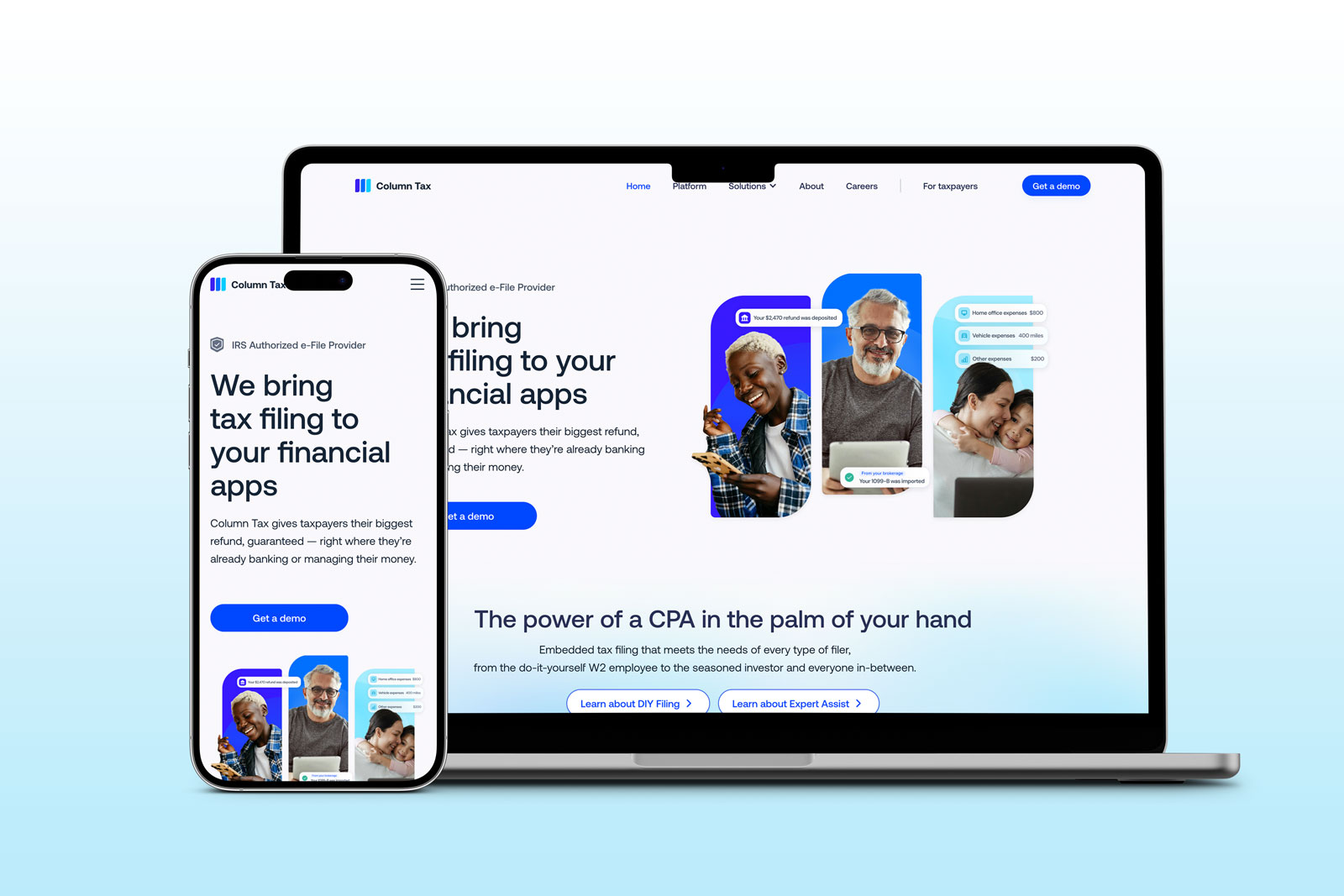
TenOneTen Ventures is our lead venture engagement — a full WordPress-to-Webflow rebuild with live Airtable portfolio sync, a 200+ episode podcast archive, and a team that's run the site themselves since November 2022. We've also built for Calm Company Fund and Interplay. Beyond funds, most of our work is with venture-backed companies, including portfolio companies of the funds we've worked with — Column Tax is a TenOneTen portfolio company and has been a client of ours for four years. That overlap is how TenOneTen found us in the first place.
We hear this a lot. The pattern is always the same — the build was fine, the training was a screen share, and three months later a small change was slow or expensive or both. Three things we do differently. Component systems instead of one-off pages, so your team builds new pages from existing pieces. Real training, hands-on and recorded. And clean code any Webflow developer could pick up, so you're never locked in with us. TenOneTen hasn't needed us in three years, which is the honest version of this answer. We're at 91% client retention across everything we do.
Yes. We work with clients across the US, Canada, the UK, and Europe. We're India-based and work US hours, which in practice means work moves overnight and you review it in the morning.
It depends on scope — how many pages, whether it's a migration or a new build, how your portfolio data is structured, and whether you need a content archive with filtering. Those variables move the number more than anything else, so a range quoted before we've seen your setup wouldn't be worth much to you. The fastest way to a real number is a 30-minute discovery call. Book one and we'll walk through your current site and give you a straight answer on scope and timeline.
Book a 30-minute discovery call. We'll discuss your current challenges and show you exactly how we can help.
Book a 30-minute discovery call. We'll look at your current site the way a founder does before a first meeting, talk through where your portfolio data lives today, and show you how we'd build a site your team keeps current without a developer.