
Est. 2019
Est. 2019
Last Updated:
April 4, 2026

Parth Gaurav
Founder & CEO
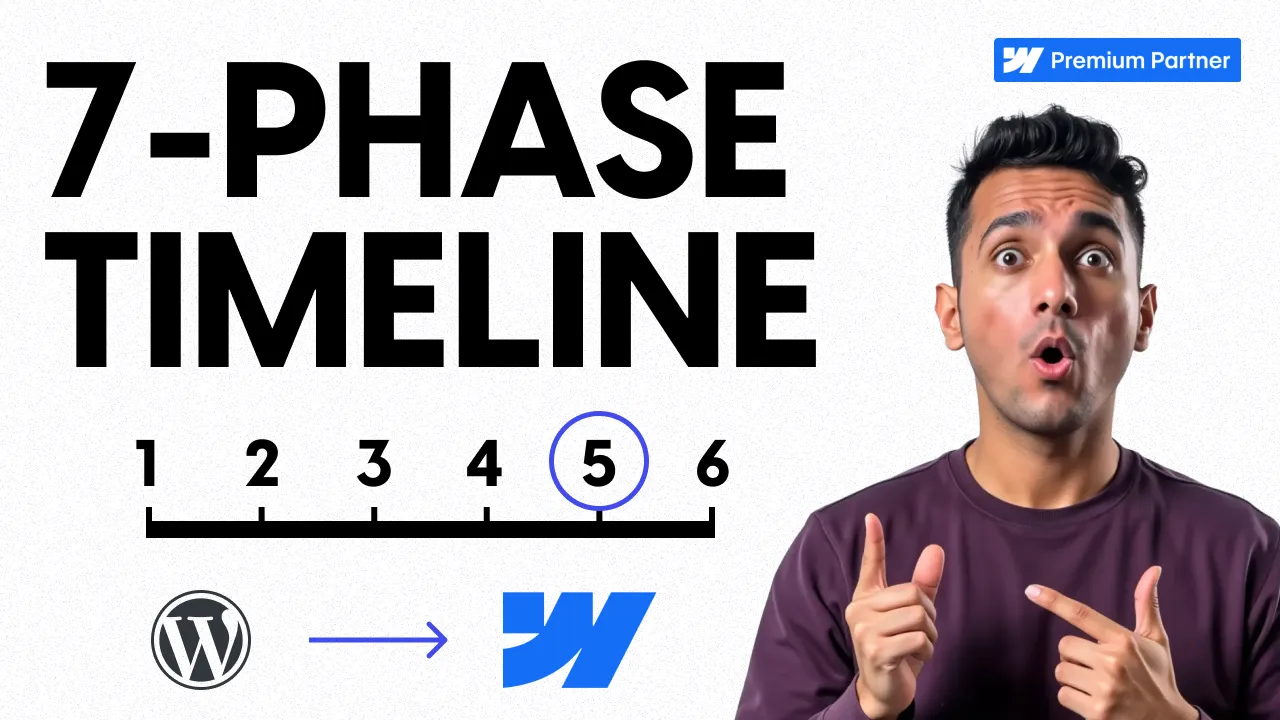

Most WordPress to Webflow migrations take between 4 and 9 weeks for B2B companies. Based on 14+ WordPress-to-Webflow migrations and 30+ total migration projects at Digi Hotshot, simple like-for-like migrations complete in 4-6 weeks, while projects with design modernization span 6-9 weeks. The process follows 7 phases: Discovery, SEO Planning, Design (optional), CMS Architecture, Component Build, QA + Analytics, and Go-Live + Redirects. The biggest delay factor is internal stakeholder alignment, not technical complexity.
If you're managing a website migration initiative, stakeholders likely keep asking: "How long will this take?" The challenge is that no one provides a straightforward answer — particularly when migrating from WordPress, where plugins, redirects, and CMS fields introduce hidden complexities.
Digi Hotshot has completed 14+ WordPress-to-Webflow migrations and 30+ total migrations for B2B companies ranging from $5M–$50M in revenue. While project scopes vary, we've created a consistent 7-phase methodology that reliably produces SEO-safe launches with minimal complications.
This guide covers:
Most WordPress to Webflow migrations complete between 4 and 9 weeks, contingent on scope, content complexity, and internal response time.
Straightforward migrations — minimal redesign, fewer than 10 pages, CMS content prepared — can launch within 4 weeks. More complex projects involving 20+ pages, design updates, and SEO revisions typically require 6–9 weeks.
Not sure where your site falls? Get a free website audit and we'll give you a realistic timeline estimate based on your current setup.
For a deeper platform comparison before you decide, read our full WordPress vs Webflow breakdown.
Here's what actual projects have looked like for us — no hypotheticals, just real data:
The fastest build we've done was Sisu Clinic — initial site live in 4 days over a holiday period (December 25 to January 10 including QA). That's not typical, but it shows what's possible when content is ready and decisions happen fast. The longest are ongoing partnerships like Vividly (3.5 years, 50+ projects) where the site evolves continuously. A migration is really just the starting point.
The 7 phases consist of: Discovery, SEO Planning, Design (if applicable), CMS Architecture, Component Build, QA + Analytics, and Go-Live + Redirects.
These phases are organized into 3 major stages:
Phase 1: Strategic Discovery
Examine existing site, identify success criteria, document constraints.
Output: Approved scope document, site structure diagram, success framework.
Phase 2: SEO & URL Planning
Protect organic rankings by documenting existing URLs, canonical guidelines, and metadata structure.
Output: Comprehensive redirect strategy and preservation approach.
This is where most agencies cut corners, and it's exactly where migrations go wrong. We document every URL, every canonical tag, and every piece of metadata before anything else moves forward. If you want to understand why this matters, we break down the full WordPress vs Webflow comparison here.
Phase 3: Design Modernization (Optional)
Update outdated design systems or align with refreshed brand standards.
Output: Modular, conversion-focused design mockups.
Straight migrations without redesign skip this phase entirely. If your current design works and your goal is just getting off WordPress, there's no reason to add weeks for a visual overhaul. We'll tell you honestly whether a redesign is worth it during Discovery.
Phase 4: CMS Architecture + Content Transfer
Reconstruct CMS logic, content structures, and field relationships within Webflow.
Output: Organized, extensible CMS setup with migrated content.
Phase 5: Webflow Component Development
Create reusable components with organized naming conventions, mobile responsiveness, and interactive elements.
Output: Fully functional, mobile-responsive, editable site build.
Phase 6: QA, Analytics Setup, & Staging Review
Perform browser compatibility testing, validate forms, implement tracking (GA4, GTM, conversion pixels).
Output: Staging environment free of defects and conversion-ready.
Phase 7: Redirects + Go-Live Deployment
Deploy redirect rules, transition domain name servers, track post-launch metrics.
Output: Live site with preserved SEO rankings and functioning analytics.
"It was a pleasure working with Digi Hotshot on our Webflow project! Our website migration from Joomla to Webflow went smoothly. Parth and Sarthak were professional and responsive, and we are quite happy with the quality of the website. We expect it will remain a helpful tool for years to come."
— Antony Del Castillo Schickram, Senior Project Manager, Idea Engineering
Before we talk about what affects your migration timeline, let's talk about what you're currently spending to keep WordPress running — because most teams underestimate this significantly.
That last row is the one that gets people. WordPress isn't expensive on paper — it's expensive in practice. Plugin conflicts, security patches, needing a developer every time marketing wants to update a landing page. With Webflow, your marketing team owns the site. They can publish pages, update content, and manage the CMS without filing a ticket.
We see this play out clearly with Column Tax — their marketing team publishes new landing pages in 2-3 days using the component system we built, with zero developer dependency. That's been the case for 4+ years running.
Migration duration depends on five critical factors: content readiness, design requirements, stakeholder availability, CMS complexity, and change control.
1. Design Involvement
Like-for-like migrations require less time than complete redesigns. Visual direction changes or branding updates can add 2–4 weeks.
2. Content Status
Clean, current CMS data speeds up the transfer process. Disorganized or outdated content creates bottlenecks. If your WordPress site has 47 draft posts from 2019 and three different category taxonomies that nobody remembers creating — that's going to add time.
3. Internal Alignment Speed
Consider who must approve each milestone. Timeline delays occur when Marketing, Design, and Engineering lack coordination. This is the single biggest delay factor we see across projects.
4. CMS Logic Complexity
Custom post types, membership-gated sections, or multi-language features add duration.
5. Scope Changes Mid-Project
This represents the biggest delay risk — typically preventable with thorough initial scoping. "Can we also add a blog?" in week 4 is a different conversation than "Can we also add a blog?" in week 1.
Pro Insight: Most delays stem from organizational factors rather than technical constraints. The best thing you can do to keep your timeline tight is assign one decision-maker with authority to approve designs and content — and make sure they're available.
Core stakeholders include: Marketing Leadership, SEO Specialist, Design Director, Engineering Team, and Executive Sponsor.
Most migrations complete in 4–9 weeks. Simple like-for-like migrations with clean content land closer to 4–6 weeks. Projects that include a design refresh, complex CMS structures, or 20+ pages typically run 6–9 weeks. The biggest variable isn't technical — it's how fast your team can review and approve deliverables at each phase.
Not if the migration is handled properly. The entire point of Phase 2 (SEO & URL Planning) is to document every existing URL, set up 301 redirects, and preserve metadata. Across our 30+ migrations, we've maintained rankings consistently. The key is mapping every single URL before anything gets built — no shortcuts, no "we'll handle redirects later." That said, you should expect minor fluctuations in the first 2–4 weeks post-launch as search engines re-crawl. That's normal and temporary.
Broken redirects and lost pages. If someone searches for your top-performing blog post and hits a 404, that's traffic gone. The second biggest risk is scope creep — adding "just one more thing" mid-project without adjusting the timeline. Both are preventable with proper planning in Phases 1 and 2.
Yes — and this is one of the main reasons companies move to Webflow in the first place. Webflow's visual editor means your marketing team can update copy, publish blog posts, swap images, and build new landing pages without waiting on a developer. We train your team during the QA phase so they're confident before go-live. Most teams are self-sufficient within the first week.
It depends on scope, but for B2B companies, migration projects typically range from $15,000–$100,000+. The variables are page count, design complexity, CMS structure, and whether you're doing a straight migration or a full redesign. The better question is what you're currently spending to maintain WordPress — when you factor in hosting, plugins, security, and developer hours for content updates, most companies are spending $5,000–$20,000+ per year on hidden maintenance costs. The migration often pays for itself within the first year.
WordPress to Webflow migrations don't require unpredictability. Using a defined 7-phase roadmap, synchronized teams, and comprehensive upfront planning, most organizations achieve live status within 6 weeks — while preserving SEO, improving CMS organization, and empowering marketing teams.
If you're weighing a migration, here's what I'd suggest: start with a free website audit. We'll look at your current WordPress setup, flag any complexity that could affect your timeline, and give you a realistic scope estimate — no pitch deck, just an honest assessment.
Or if you want to dig deeper into the WordPress vs Webflow decision first, read our full comparison here.
Last Updated:
April 4, 2026
Book a 30-minute discovery call. We'll discuss your current challenges and show you exactly how we can help.
Your competitors aren't stuck in developer queues. They're launching campaigns, testing messages, and capturing market share while you're waiting for simple updates.
Eliminate the bottlenecks. Give your marketing team the infrastructure they deserve—fast, autonomous, built to scale.